Myanmar People's Assembly Hall
Background
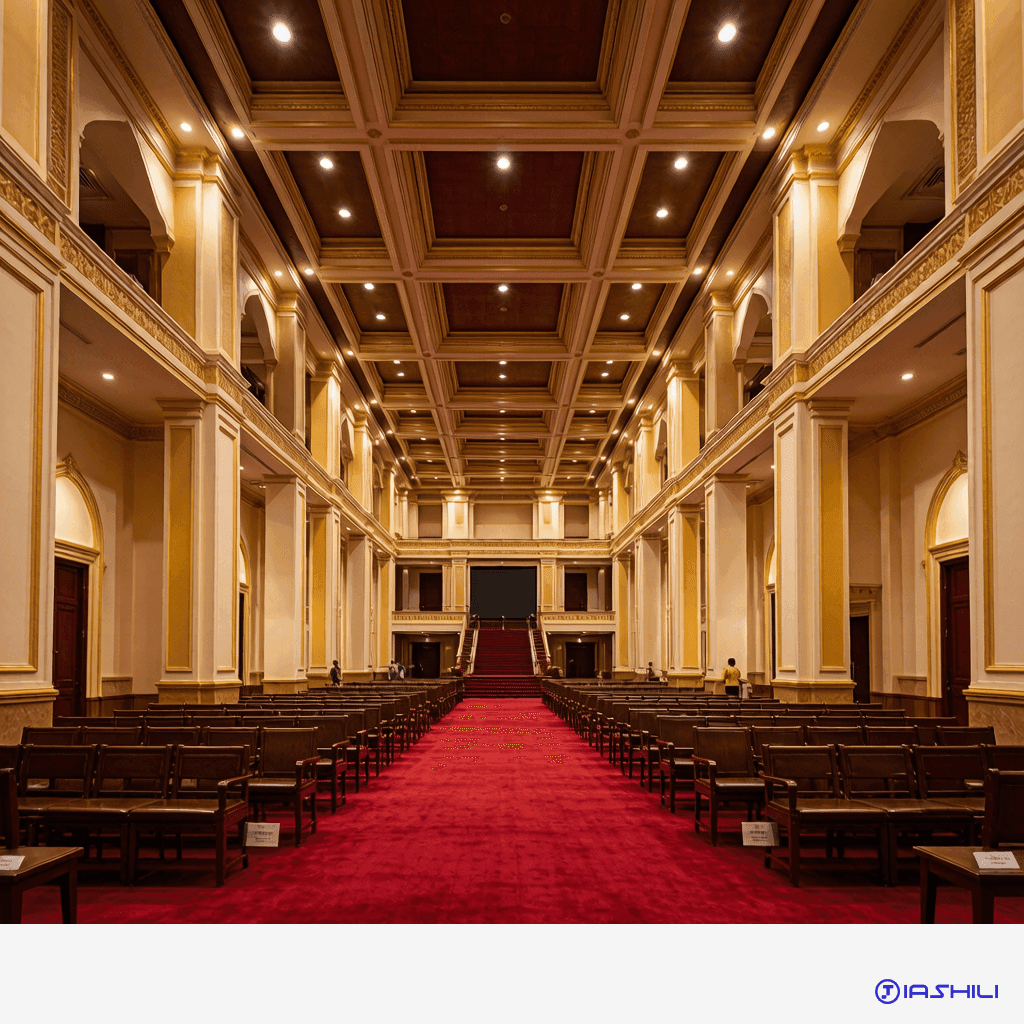
This project involves a national-level public building in Myanmar that serves as a venue for parliamentary deliberations and official receptions. The exterior walls must withstand intense ultraviolet radiation and high humidity typical of the tropical monsoon climate, while the interior walls need to endure frequent human contact, imposing extremely strict performance requirements on coatings. The technical plan adopts a layered matching system: surface preparation involves grinding and dust removal to ensure the substrate meets specified roughness standards. First, an interior alkali-resistant primer with adhesion strength ≥ grade 1 is applied to block alkaline substances from seeping out of the wall, followed by applying 5-in-1 lotus leaf interior emulsion paint with a film thickness of 25μm. For the exterior, travertine art paint with a film thickness of 30μm is used to integrate decorative and protective functions. The construction process strictly follows standardized procedures: the substrate must be free of floating dust and loose particles prior to coating. The alkali-resistant primer is applied in two coats with a 2-hour interval between coats, the interior emulsion paint is applied in two layers to achieve a total film thickness of no less than 25μm, and the exterior art paint is sprayed after being troweled into shape, with environmental humidity controlled below 70% to guarantee good leveling properties. Post-completion tests show that the coating has an adhesion strength ≥ grade 1, withstands artificial aging for over 2000 hours, endures 2000+ scrub cycles, meets the Class I waterproof standard stipulated in GB/T 17219, and has a VOC content of only 28g/L, far below national limits, fully meeting the long-term usage requirements of the assembly hall.