
Industry 2026-09-08
JIASHILI Epoxy Floor Paint Construction Process Explained: From Substrate Treatment to Acceptance Standards
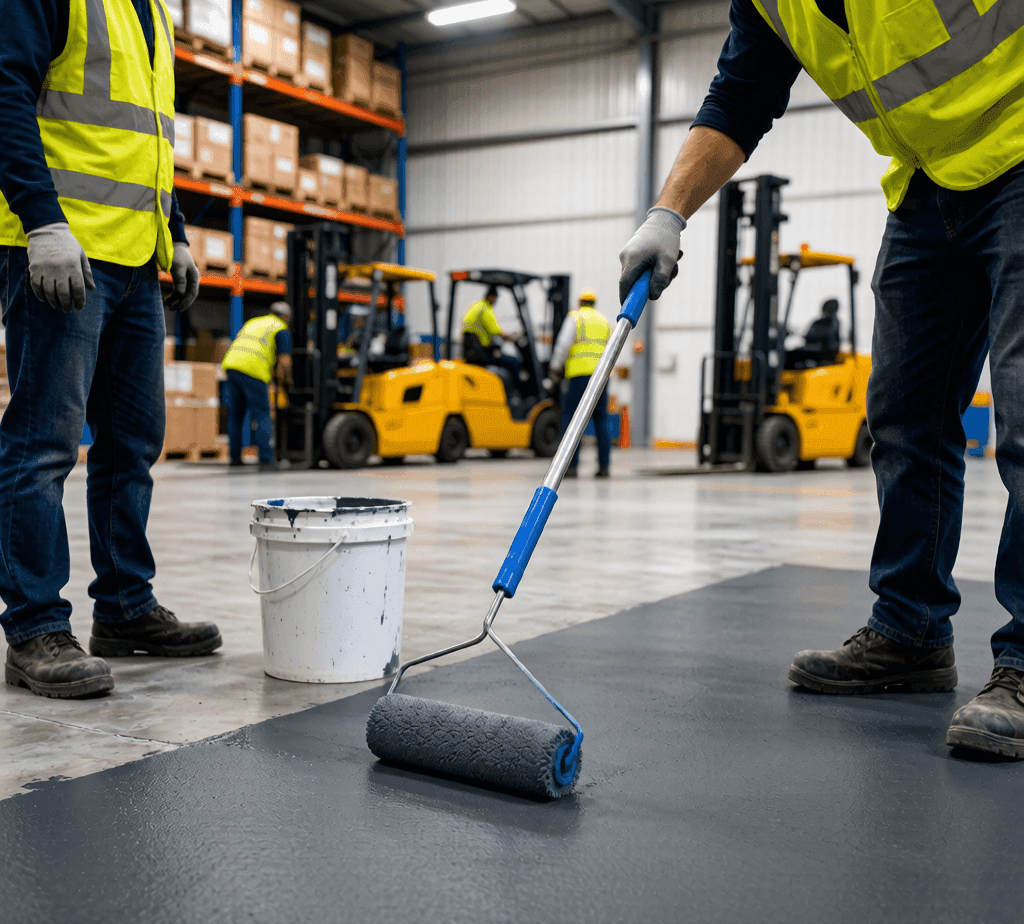
<h2>Substrate treatment is the core prerequisite for epoxy floor paint construction</h2><p>Many construction teams often skip substrate treatment and directly apply epoxy floor paint to save time, only to face problems like bubbling and peeling within half a year, leading to costly rework. JIASHILI recommends repairing surface depressions with cement mortar first; gaps wider than 5mm should be filled with epoxy mortar before grinding the surface until the flatness deviation is no more than 2mm. During a recent project at an electronics factory in Dongguan, we followed this standard strictly, and the final acceptance met all flatness requirements. <img src="/images/news/news-9-1.png" alt="Workers are treating the substrate surface for epoxy floor paint construction" /></p><p>After substrate treatment, a moisture content test is required: the moisture content of the ground must be below 8% for ordinary epoxy floor paint. If the value exceeds this limit, an infrared dryer must be used to remove moisture, otherwise bubbling is likely to occur later. We once encountered a logistics warehouse that started construction without testing moisture content, resulting in large-scale bubbling after three months and forcing a complete rework that cost over hundreds of thousands of yuan.</p><h2>Key points for applying intermediate and topcoats of epoxy floor paint</h2><p>Once the substrate meets the standards, the intermediate coat can be applied. JIASHILI recommends using intermediate coat materials with a solid content of over 65%, so the dried thickness can reach 0.5-1mm, which can fill minor gaps in the substrate and provide a stable base for the topcoat. Apply the intermediate coat using a cross-hatch method: wait 4-6 hours for the first layer to dry before applying the second layer. Never apply it too thick at once to save time, as this can cause cracking. <img src="/images/news/news-9-2.png" alt="Workers are applying the intermediate coat of epoxy floor paint to the ground" /></p><p>After the intermediate coat dries completely, the topcoat can be applied. Topcoats come in glossy, semi-matte, and matte finishes, and the choice depends on the usage scenario: choose glossy finish for workshops with heavy traffic to easily spot and clean stains; opt for matte finish in offices to reduce glare. The construction temperature should be kept between 20-30°C with humidity below 75% to ensure the finished floor is shiny and smooth with adhesion meeting industry standards.</p><h2>Acceptance standards for epoxy floor paint cannot be ignored</h2><p>Do not put the finished floor into use immediately; wait 7 days for curing before acceptance. During acceptance, first check if there are any defects such as missed coating, bubbles, or cracks, and the surface should feel smooth without particles when touched. Next, conduct an adhesion test: use a scoring tool to draw 1cm×1cm squares on the ground, then stick tape over them and peel it off quickly; if the coating in the squares does not peel off, the adhesion meets the standard.<p>Finally, measure the hardness using a pencil hardness tester: the surface hardness of ordinary epoxy floor paint should reach above 2H. For workshops with heavy equipment rolling over the floor, choose products with higher hardness, such as JIASHILI's high-strength epoxy floor paint, which can reach 3H hardness and withstand the pressure of several-ton equipment without deformation. Following these construction and acceptance standards ensures the epoxy floor can last 5-10 years.</p>
Share:
BackRelated
Related Articles
JIASHILI Explains Core Indicators of Coating Weather Resistance: How to Judge Scrub Resistance and Actual Quality?
2026-09-08

JIASHILI eco-friendly children's paint helps create formaldehyde-free kids' rooms and protect children's respiratory health
2026-09-08
JIASHILI explains the causes and practical solutions of latex paint color difference to help you solve wall color mismatch problems.
2026-09-08